
The Phoenix Rising From Its Ashes: 7 Reflections on Spiritual Struggle and Putting on "The Full Armor of God"
"You must be born from above." Gospel of John 3:7


“Phoenix Rising from Its Ashes”, AI-Generated, via Dall.E, credit to: the National Catholic Broadcasting Council
In this post - and during these challenging times - I would like to revisit and expand upon some earlier reflections on the mythical phoenix as a symbol of spiritual struggle and of the Resurrection.
ONE: The Phoenix Rising from its Ashes as a Symbol of the Resurrection.
The mythological bird that is said to be “consumed by fire” only to rise again from its own ashes, came to be adopted within early Christian reflection as a symbol of the Resurrection, as we see in the First Letter of St. Clement (1 Clement, 24:3–5; 25:1–4).
The faithful came to be assured that they would “flourish like the phoenix” whose “dying day is its birthday” (cf., Tertullian, On the Resurrection of the Flesh, 13; and Psalm 91:13 LXX). For the phoenix “dies in order to live” (see de Ave Phoenice).
TWO: The Phoenix and the Glory about to be Revealed to Us.
Indeed, St. Paul tells us that those who are living faithfully the mystery of the cross, death and resurrection of Jesus Christ already bear within themselves the promise of new life. Here is that “glory about to be revealed to us” about which he writes in his Letter to the Romans 8:18 (see as well, 1 Peter 5:1). For even though “our outer nature is wasting away, our inner nature is being renewed” and transformed by the fire of the Holy Spirit, “day by day,” as St. Paul reminds us in his Second Letter to the Corinthians, 4:16.
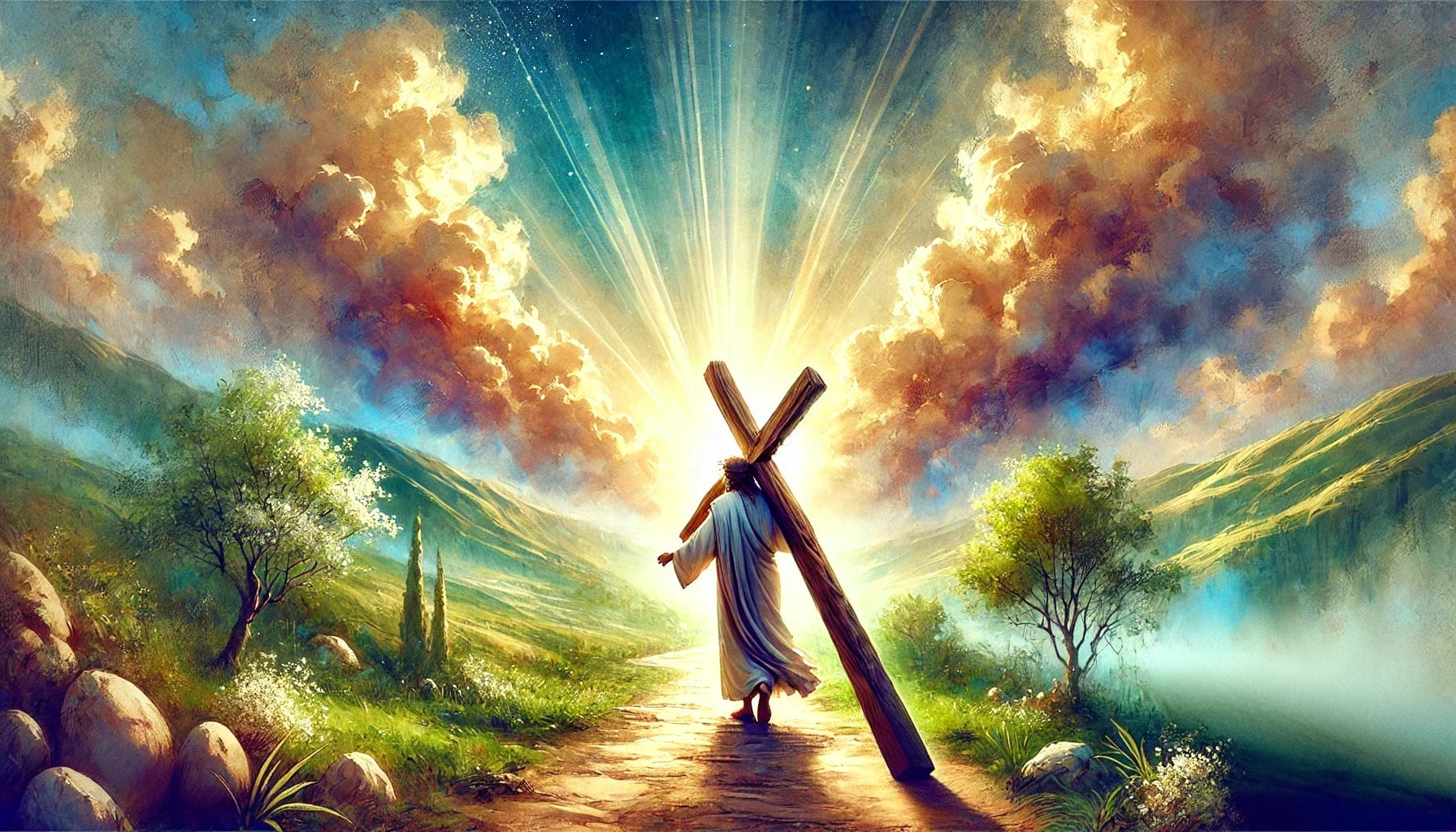
“Luke 9:23”, AI-Generated, via Dall.E, credit to: the National Catholic Broadcasting Council
THREE: Growth in the Spiritual Life involves a Struggle.
Growth in the spiritual life is a challenging and demanding process of change under pressure. For ultimately, spiritual transformation involves sacrifice, self-denial - dying to one’s self - so as to be born anew out of the ashes of our former way of life, through God’s gift of that refining, purifying and sanctifying fire of the Holy Spirit (Luke 9:23, Romans 6:5).
Eventually, as scholars tell us, the image of the phoenix rising from the ashes would come to be seen as a symbol of the angelic life of the ascetic mystics. St. John, the prophets and the apocalyptic visionaries, experienced within themselves the divinely inspired and profoundly-renewing visions of life in heaven together with the Angels, that would inspire the faithful on their journey through this passing world of shadows and broken dreams.
FOUR: Our Life on Earth Involves a Spiritual Battle.
As the Bible shows us, our journey on this earth is marked by struggle, at times a very difficult struggle. Indeed, in the Old Testament, the beleaguered Job expresses the view that our “life on earth is a warfare,” and our days upon earth are “like those of a labourer.” (Job 7:1).

“God will give His Angels Charge of You to Guard You in all your Ways.” Psalm 91:11. AI-Generated, via Dall.E, credit: National Catholic Broadcasting Council
Growth in the interior life involves a spiritual battle. At a cosmic level, the Book of Revelation describes the war in heaven between St. Michael (accompanied by the angels of light), and Satan, the dragon and father of lies (accompanied by his infernal cohorts).
With regard to the interior life, St. Paul leads us to reflect upon the mystery of this spiritual struggle in terms of “spirit” vs. “flesh.” The Gospel of John speaks in terms of “light” vs. “darkness,” while St. Augustine speaks of “the two cities” that have been formed by two loves:
The earthly by the love of self, even to the contempt of God; the heavenly by the love of God, even to the contempt of self. The former glories in itself, the latter in the Lord (see, The City of God, XIV, 28).
Having been tested by the fires of suffering and tragedy, Job’s life is completely renewed as God raises him up out of the simmering coals of the ash heap of a broken life, and sets before him a blessed new beginning. Job’s inspiring example of faith and patient endurance calls us to an unwavering trust in the God “who makes all things new” (Rev. 21:5) – even in this passing world of shattered dreams.
Put on the full armor of God, so that you can take your stand against the devil’s schemes. (Ephesians 6:11)

Spiritual Combat: “Put on the Full Armor of God”, Ephesians 6:11, AI-Generated, via Dall.E, credit: National Catholic Broadcasting Council
FIVE: Spiritual Struggle, “Spiritual Combat” & the “Battle of Prayer”.
What do we struggle against? According to St. Francis de Sales, ours is:
A struggle against the constant danger of moral and spiritual lapse, against the lingering effects of past deeds, against the solicitations of the flesh, the allure of the world, the snares of the devil.
In his Letter to the Romans, St. Paul speaks of the mystery of a divided heart, a divided self. While knowing the good and wanting to do it, Paul discerns “another law,” another principle, a rebellious force, a sinful power at work within himself. He states:
I do not do the good I want, but the evil I do not want is what I do. (Romans 7:19-20)
The Catechism of the Catholic Church reminds us that prayer and growth in the life of the Spirit always presuppose a sustained effort on our part:
The great figures of prayer of the Old Covenant before Christ, as well as the Mother of God, the saints, and He Himself, all teach us this: prayer is a battle. Against whom? Against ourselves and against the wiles of the tempter who does all he can to turn man away from prayer, away from union with God. . . . The “spiritual battle” of the Christian’s new life is inseparable from the battle of prayer. §2725
St. Pope John Paul II speaks in terms of ‘spiritual combat.’ He writes that the path to holiness involves the acceptance of spiritual combat:
This is a demanding reality which is not always given due attention today. Tradition has often seen an image of this spiritual combat in Jacob’s wrestling with the mystery of God, whom he confronts in order to receive His blessing and to see Him (cf. Genesis 32:23-31; and Vita Consacrata, Art. 38).
St. Pope John Paul makes it clear that we need to appropriate this struggle, to put on the full armor of God, and so to enter the battle bravely, as he underscores the importance of prayer, asceticism, and of Eucharistic Adoration.
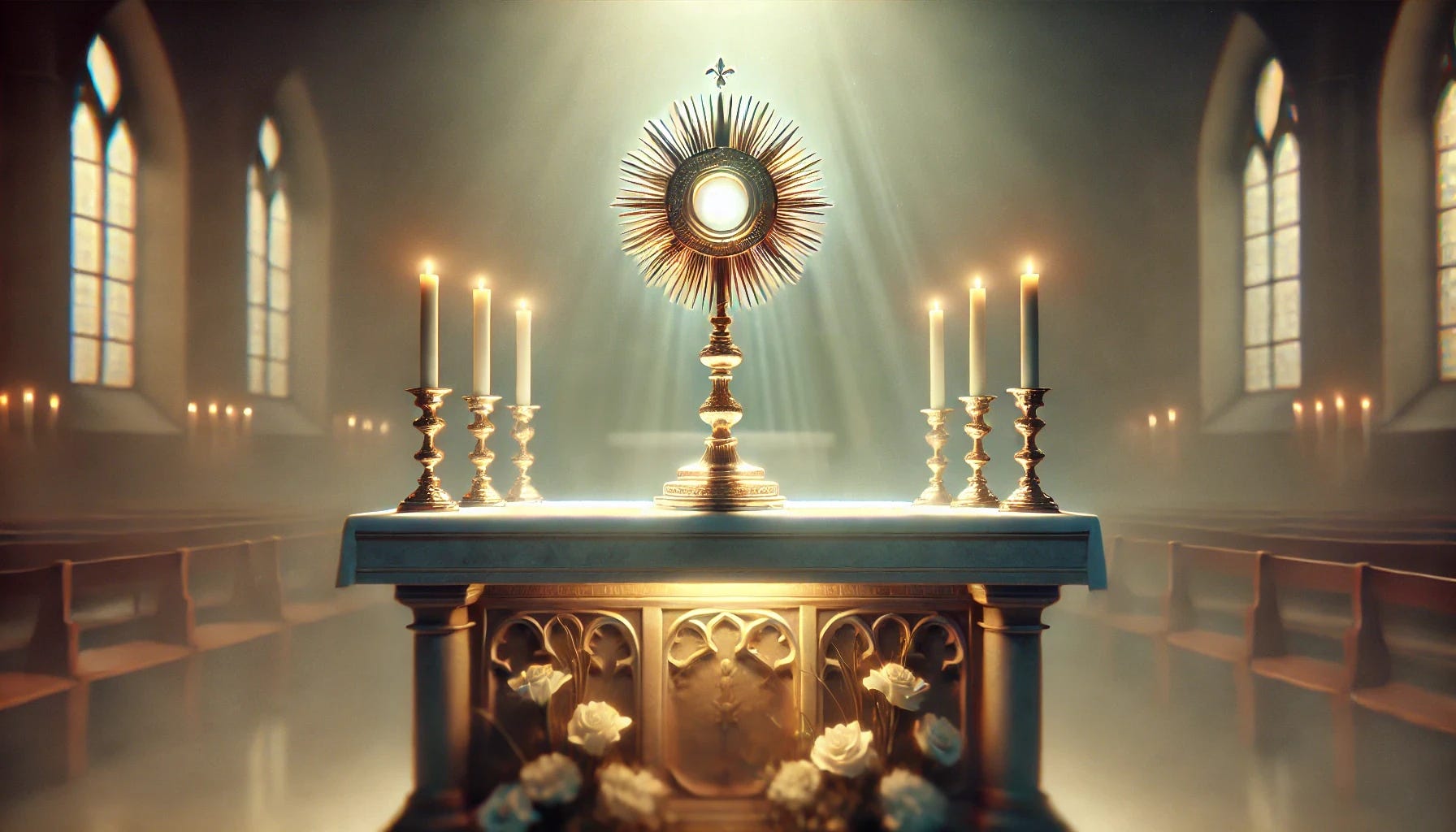
“Eucharistic Adoration”, AI-Generated, via Dall.E, credit: National Catholic Broadcasting Council
SIX: Prayer and Discernment on Our Spiritual Journey.
Inspired by the images of future glory that adorn the cosmic canvas of John’s story world, Our Lord invites us to reflect upon our own victory over death, beginning with the conversion of heart to which we are called, as co-requisite of giving courageous public witness to the values of the Gospel.
St. John of the Cross calls us to a spirit of patience amid whatever trials and difficulties we may be facing, stating that:
When you are burdened you are close to God, your strength, who abides with the afflicted. When you are relieved of the burden you are close to yourself, your own weakness; for virtue and strength of soul grow and are confirmed in the trials of patience. (Dicos di luz y amor)
Let us pray to discern what God is asking of us in our present situation. But above all, let us resolve to journey always with Christ along the royal road of the Cross, so as to arrive at that new beginning amid the smoking embers of our present situation, and in the face of whatever difficulties that may lie before us.
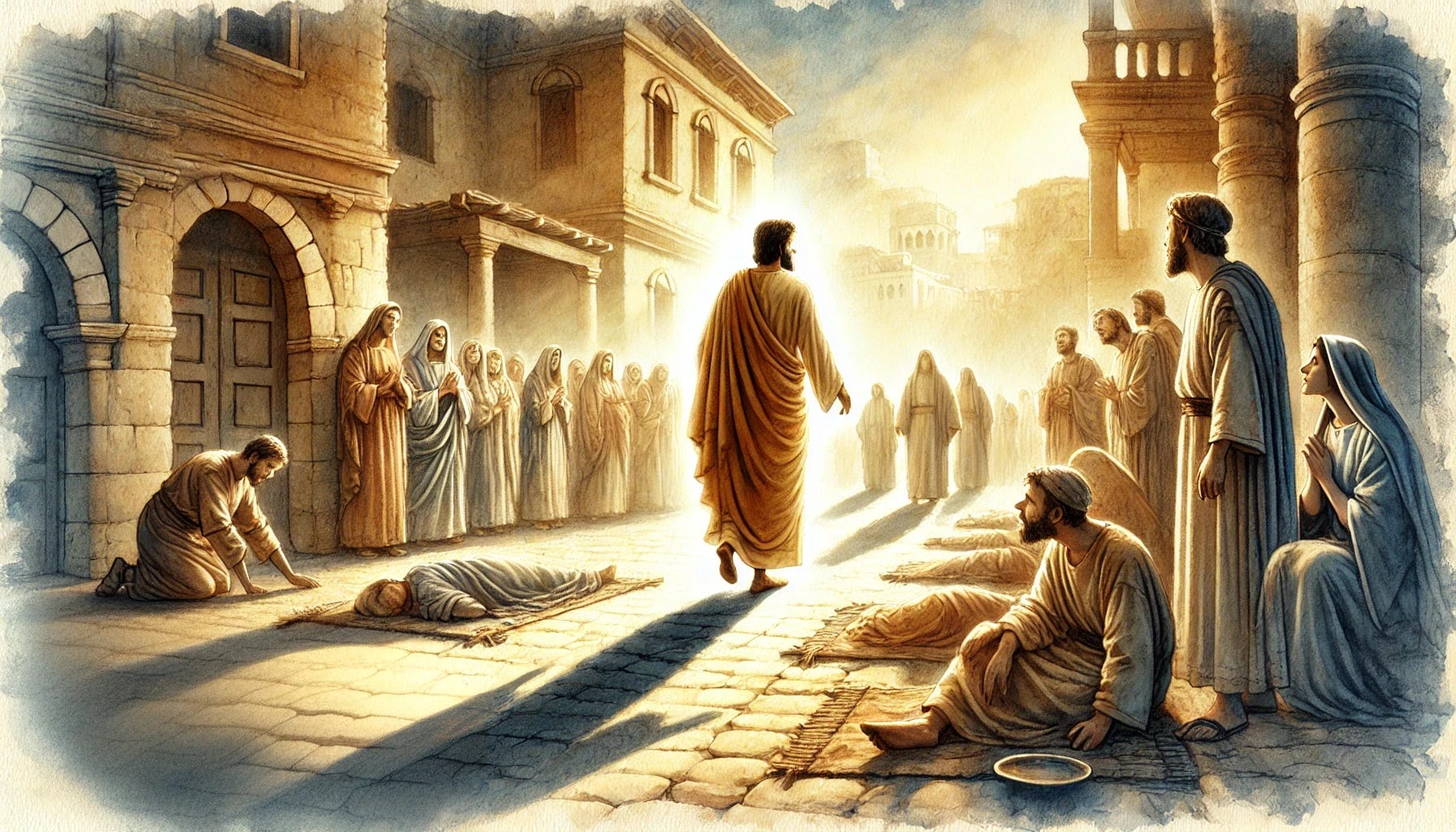
“St. Peter Healing the Sick with his Shadow”, Acts 5:15, AI-Generated, via Dall.E, credit: National Catholic Broadcasting Council
SEVEN: Christian Charity and the Call to Help Others in Their Struggles.
When we feel that the circumstances of our lives have been reduced to ashes, when we feel that there is no hope, when anxiety reigns, when, like Job, our closest friends offer us no consolation, let us continue to trust in the God who is in the process of leading us safely to His everlasting city.
St. Josemaría Escrivá offers us the following advice:
Since to be in a state of struggle is part and parcel of the human condition, let us try to fulfil our obligations with determination. Let us pray and work with good will, with upright motives and with our sights set on what God wants (Friends of God, 217).
For those who may not be experiencing such difficult circumstances, reach out to those who are. Listen. Be attentive. Offer encouragement and support. Practice almsgiving. Support your local food bank and other charities. Pray for all those who are undergoing the great trials of life in the present time, and let us reach out to them in their time of need.
In conclusion: growth and rebirth in the spiritual life can be seen in terms of a process, a lifelong process of spiritual transformation.
In his Letter to the Ephesians, St. Paul invites us to shed, or “cast off” our “old self” corrupted by sin: to be renewed spiritually in our way of thinking, and to “put on” or “be clothed” with “the new self, created according to the likeness of God in true righteousness and holiness.” Indeed, as St. John shows us in the Book of Revelation, ours is the God who “makes all things new” (Rev. 21:5).
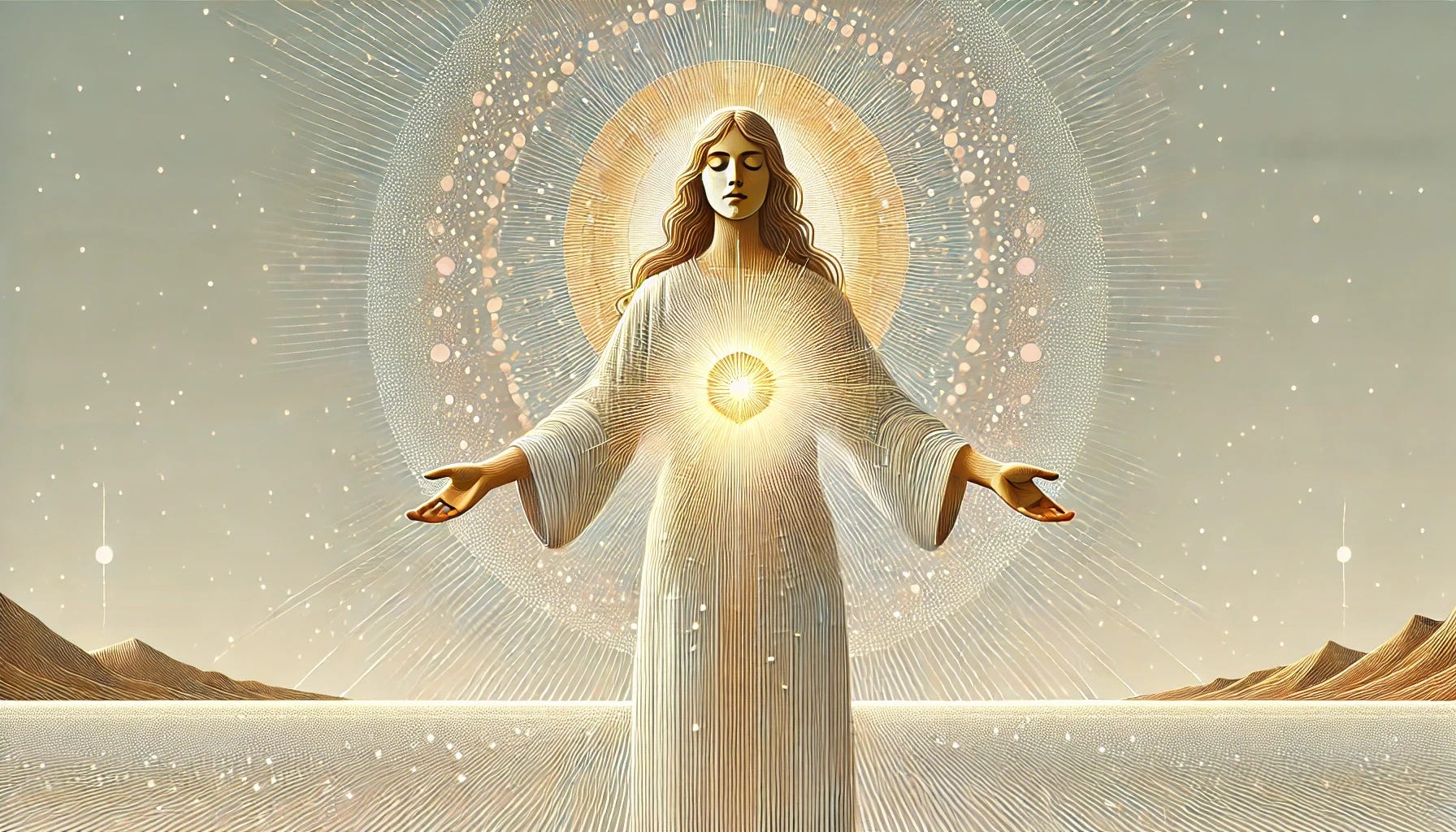
“Putting on The New Self”, St. Paul, Letter to the Ephesians, AI-Generated, via Dall.E, credit: National Catholic Broadcasting Council
And so, inspired by the lives of the Saints, let us strive every day and in every moment to cast off our old, sinful ways, to put on “the full armor of God,” to be renewed and reborn to new life through the power of the Holy Spirit, and so to become - even now - a new creation in Christ.
For as St. Bonaventure comments:
Into the New Jerusalem no one steps, unless it first descends into the heart by grace.

“Your Body is a Temple of the Holy Spirit”, 1 Corinthians 6:19, AI-Generated, via Dall.E, credit: National Catholic Broadcasting Council
And so, let us pray, inspired by St. Teresa of Avila:
Let nothing disturb you, nothing frighten you, all things are passing, God is unchanging. Patience obtains all; nothing is lacking to those who have God: God alone is sufficient.

“God Alone is Sufficient”, St. Theresa of Avila, AI-Generated, via Dall.E, credit: National Catholic Broadcasting Council
They that hope in the Lord will renew their strength,
they will soar on eagles’ wings
They will run and not grow weary,
walk and not grow faint. (Isaiah 40:31)